


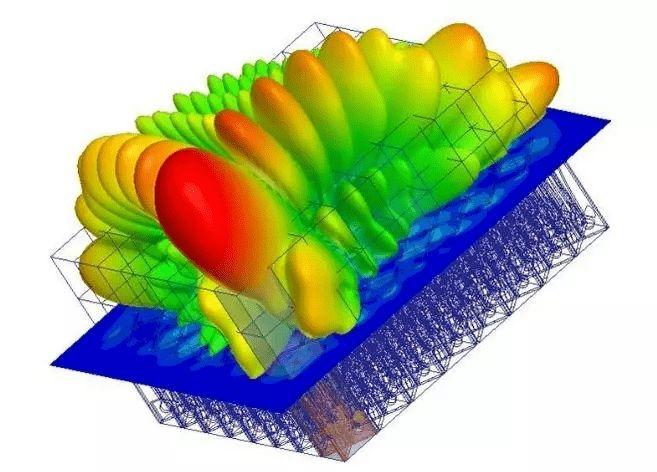
Long-term antenna gain introduces the amount of power transmitted in the peak radiation direction, relative to an isotropic source. Antenna gain is more commonly quoted in antenna specification tables. Antenna gain is important because it takes into account the actual losses incurred.
A 3 dB gain antenna refers to an antenna that receives power far exceeding 3 dB more than what would be received from a lossless isotropic antenna with the same input power. 3 dB is equivalent to twice the power.
Antenna gain is sometimes discussed in terms of its directional or angular functionality. However, when a single number is assigned to the gain, that number represents the peak gain for all directions. The “G” for antenna gain can be combined with the “D” for directivity in the future tense.
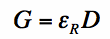
[方程 3]
The gain of a true antenna can be as high as 50 dB for very large satellite dishes. Its directivity can be as low as 1.76 dB for a true antenna like a short dipole antenna. The directivity can never be less than 0 dB. However, the gain of a peak antenna can be arbitrarily small. This is due to loss or inefficiency. An electrically small antenna is one that is relatively smaller than the wavelength of the antenna’s operating frequency. Small antennas can be very inefficient. The antenna gain is often below -10 dB, even without considering impedance mismatch.